
The short answer: soft is a recipe choice, not a guarantee
When a bar is labeled "soft," it usually means the manufacturer designed the core and coating to resist the firm, dense bite many protein bars are known for. But softness is relative. A soft bar can still feel chewy, and a bar marketed as soft may harden if it's stored poorly or eaten past its prime. The label tells you the intended texture, not a universal standard.
So are soft protein bars really softer? Compared with a typical dense protein bar, yes—they're formulated to be gentler on the jaw. But "softer" doesn't mean "soft like a marshmallow." It means the texture is engineered to be less rigid, often through a softer core, a layer of sauce or caramel, and a thinner chocolate shell.
Why some protein bars feel hard in the first place
Protein bars can turn hard for several reasons. A high proportion of protein powder—especially certain types of whey or casein—can create a dry, dense structure. Low moisture and a tightly compressed shape also contribute to a firm bite. Over time, some bars lose moisture and become stiffer, particularly if they're stored in a dry environment or handled roughly.
That's why texture varies so much across brands and even within a product line. A bar that's soft when fresh can become noticeably harder after months on a shelf or a few hours in a hot car. The lesson: judge a bar's texture by its recipe and condition, not just by the word "soft" on the wrapper.
What actually makes a soft protein bar soft
Soft bars typically rely on a few structural tricks. A softer core—often with more humectants like glycerin or syrups—stays pliable. A layer of caramel, nougat, or sauce adds moisture and a yielding bite. And a thinner chocolate coating breaks more easily than a thick shell, so you don't have to bite through a rigid layer.
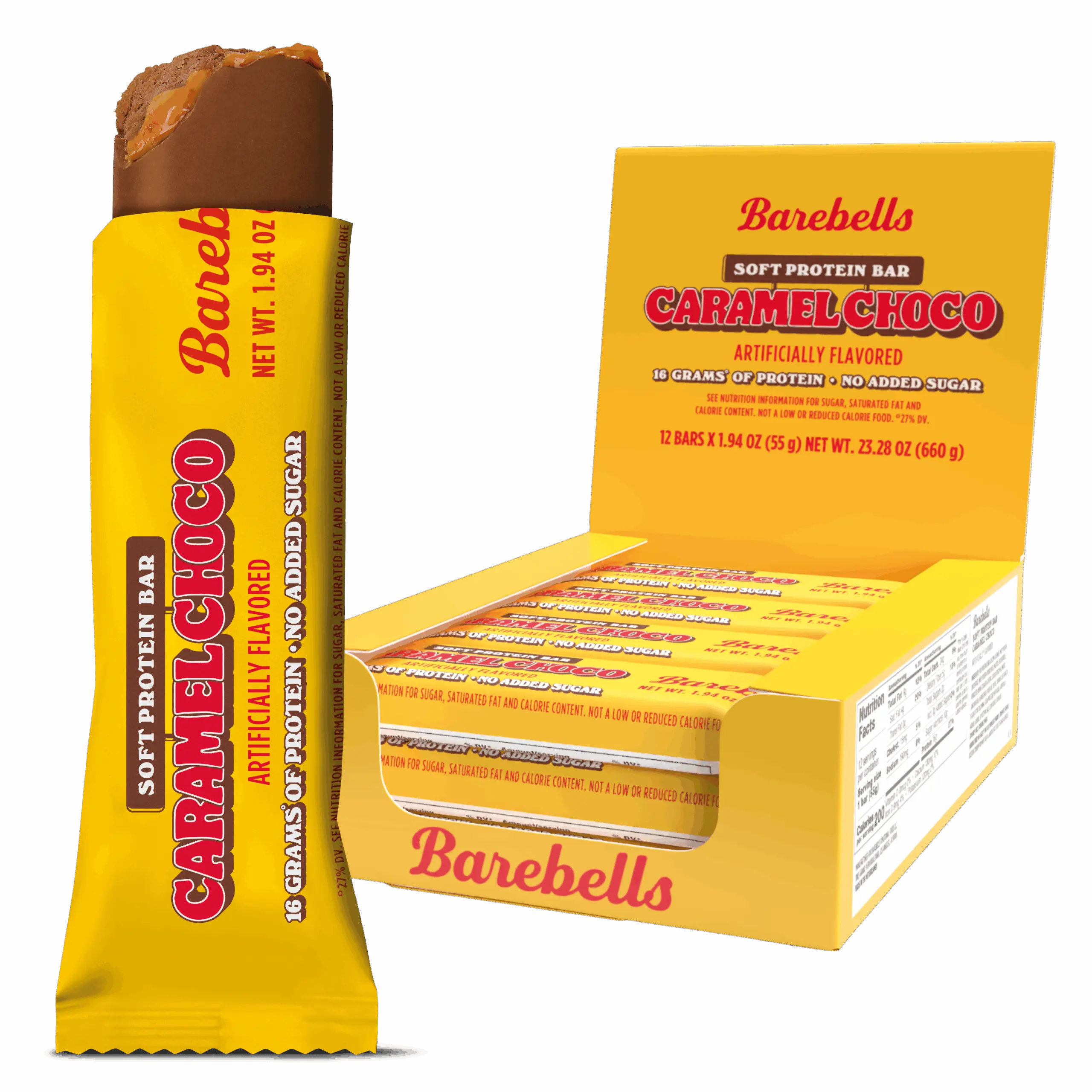
For example, Barebells Protein Bar - Caramel Choco is described as having a "super soft and fluffy chocolate core" topped with a caramel layer and a silky soft chocolate shell. That combination—soft core, moist layer, thin shell—is a classic soft-bar architecture. The result is a bar that gives way more easily than a compact, single-texture protein bar.
Texture evidence from two soft bars
- Barebells Protein Bar - Caramel Choco: Super soft and fluffy chocolate core, topped with sweet caramel layer and silky soft chocolate shell. Shows how a soft core plus a moist caramel layer and thin shell can create a gentler bite.

Barebells Protein Bar - Caramel Choco - Barebells Protein Bar - Banana Caramel: Features a soft banana core for a natural fruit flavor, layered with a smooth caramel sauce, and coated in a milky chocolate shell. Illustrates that softness can come from a fruit-based core and caramel layer, not just chocolate.
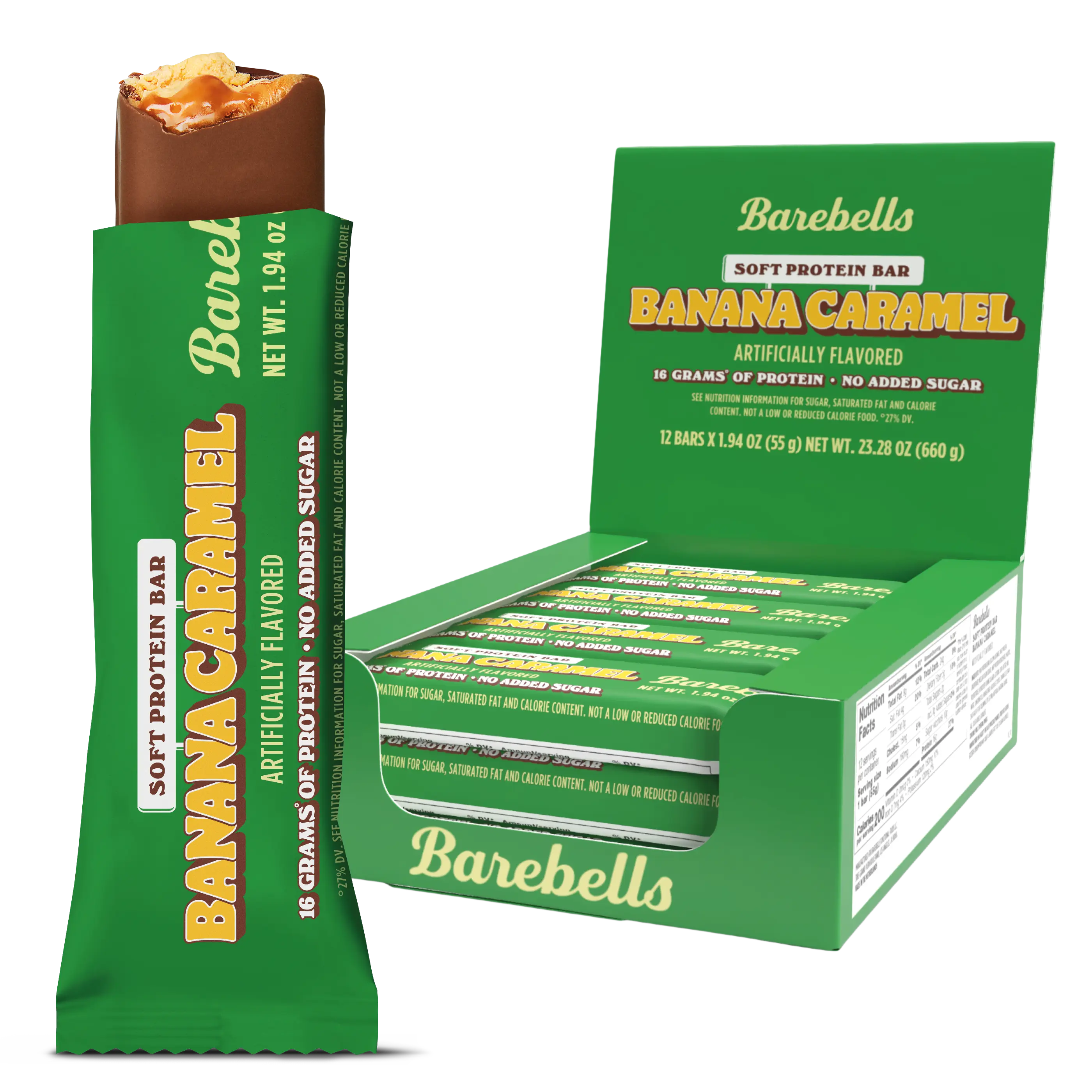
Barebells Protein Bar - Banana Caramel
Soft vs. chewy: they're not opposites
A common misconception is that soft and chewy are mutually exclusive. In reality, many soft protein bars are also chewy—they yield under your teeth but still require some work. Chewiness often comes from the protein blend and the binders that hold the bar together. A bar can be soft yet chewy, or soft and almost melt-in-your-mouth, depending on the recipe.
When you see "soft" on a label, it's telling you the bar is designed to be less hard and less dry, not that it will dissolve instantly. If you prefer a bar that requires minimal chewing, look for descriptions like "fluffy" or "melts in your mouth." If you like a bit of resistance, a soft bar with a caramel layer often delivers a pleasant chew.
How to judge texture before you buy
Since you can't squeeze a bar through the screen, use the product description as your guide. Look for words like "soft core," "fluffy," "caramel layer," or "silky shell." These signal a texture designed to be gentler. Conversely, "crunchy," "crispy," or "dense" point to a firmer bite.
Also consider the protein content. Bars with very high protein counts sometimes sacrifice softness for density, though that's not a hard rule. And check the storage advice: heat and time can undo even the best-formulated soft texture. If you're buying online, try to ensure the bar won't sit in a hot mailbox for hours.
The takeaway: soft is a spectrum, not a switch
Soft protein bars are generally softer than their dense counterparts, but the word "soft" covers a range of textures. A soft bar can be fluffy, chewy, or creamy—and its texture can change with storage and freshness. The next time you see a soft bar, read the description for clues about the core, layers, and coating. That tells you more about the actual bite than the single word on the front.


